Business Episodes
12
Aug. 20, 2026
The Charity Trap: Why Disability Hiring Needs a New Narrative
Why is hiring people with disabilities still so often framed as an act of goodwill rather than a smart business decision? This episode explores the harmful legacy of the charity mindset in disability employment and why it still holds organizations back. Drawing inspiration from a recent article by disability advocate Steve Way, host Ashley Sims examines how low expectations, deficit-based thinking, and employer-centered definitions of success can undermine true inclusion. She challenges leaders to stop viewing disability hiring as philanthropy and start treating it as what it really is: access to talent, innovation, and business value. The conversation also explores an important question for the future of workplace inclusion: Are we measuring disability inclusion based on what employers say they do, or on what disabled employees actually experience?
11
July 17, 2026
How Employers Can Escape the AI Hiring Loop and Build More Inclusive Hiring Practices
AI is transforming hiring, but is it helping employers find the best talent or creating new barriers for qualified candidates? In this episode of Disability@Work, host Ashley Sims explores the growing reliance on AI hiring tools and the risks that come with automated screening, sourcing, and candidate ranking. Building on insights shared by Beverly Dines, COO of Foxsy and Founder of Beverlytics Consultancy, the conversation examines Stanford research showing how AI hiring systems can unintentionally reinforce systemic bias and filter out talented candidates before a human ever reviews their application. While much of the discussion around AI hiring focuses on job seekers, this episode shifts the spotlight to employers and talent acquisition teams facing overwhelming application volumes and increasing pressure to hire efficiently. Ashley discusses practical strategies organizations can use to balance efficiency with equity, including rethinking what it means to be qualified, audi…
9
June 9, 2026
Gen Z, AI & The Future of Entry Level Work
At graduation ceremonies across the U.S., students are pushing back on artificial intelligence. From boos aimed at pro-AI speeches to growing skepticism about job prospects, Gen Z is sending a clear message: the future of work feels uncertain. In this episode of Disability@Work, host Ashley Sims explores how AI is reshaping entry-level jobs, why recent graduates are questioning the hype, and what this means for the next generation of talent. Drawing on recent 2026 workforce data, Ashley unpacks the growing disconnect between rising employer expectations for AI skills and the lack of preparation many graduates feel. She also dives into a critical question: what happens when the “first rung” of the career ladder starts to disappear? From “cognitive debt” to the tension between efficiency and expertise, this episode challenges both job seekers and employers to rethink how early-career growth happens in an AI-driven world. Whether you’re a recent grad, employer, or advocate fo…
8
May 19, 2026
Why Employees with Disabilities Leave for Leadership Roles: The Sponsorship Gap
Why are top employees with disabilities leaving organizations to grow their careers? In this episode of Disability @ Work, host Ashley Sims explores a critical workforce trend: professionals with disabilities are 4x more likely to reach senior roles by switching companies than through internal promotions. The problem isn’t a lack of talent—it’s a lack of opportunity. Ashley breaks down the mentorship vs. sponsorship gap, how workplace bias limits advancement, and why organizations are unintentionally becoming “training grounds” for competitors. She also highlights the real cost of inaction: replacing high-performing talent is far more expensive than investing in accessibility and advancement. If you’re a recruiter, HR leader, or executive looking to retain and develop inclusive leadership pipelines, this episode offers practical insights you can act on now.
7
April 28, 2026
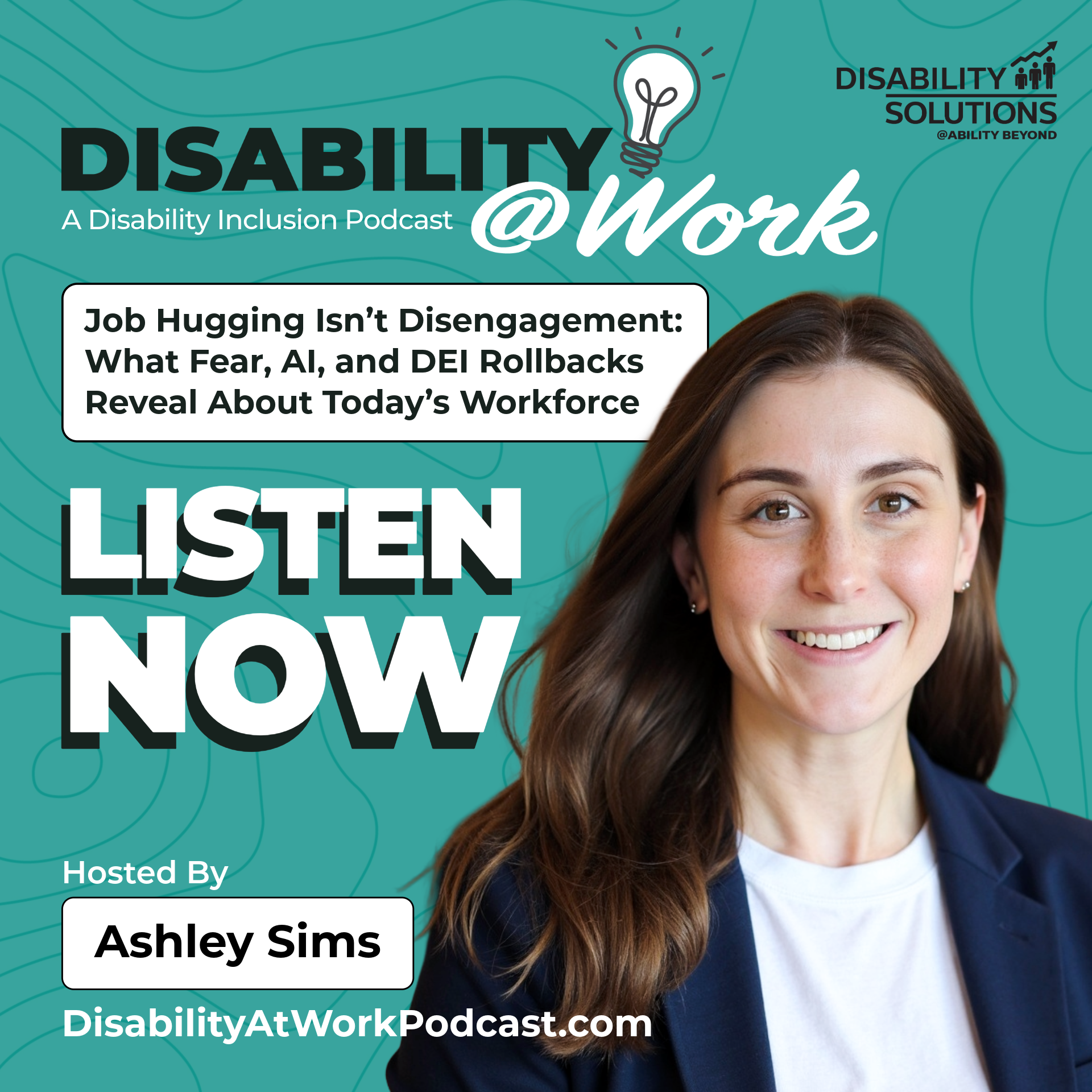
Job Hugging Isn't Disengagement: What Fear, AI, and DEI Rollbacks Reveal About Today's Workforce
In this episode of Disability@Work, host Ashley Sims breaks down job hugging—a growing workplace trend where employees stay in roles they might otherwise leave because uncertainty feels too risky. This isn’t quiet-quitting or a lack of ambition. It’s a rational response to economic instability, layoffs, AI disruption, DEI rollbacks, and declining psychological safety at work. Drawing on findings from the 2026 Disability at Work Report, Ashley explores why disabled employees are especially likely to job hug, how fear around disclosure and accommodations shapes career decisions, and why low turnover does not equal engagement. The episode also challenges employers to rethink what job hugging signals about trust, inclusion, and workplace systems. Whether you’re an employer trying to understand shifting workforce behavior or an employee feeling stuck for practical reasons, this conversation offers critical insight into how safety, trust, and accessibility shape career mobility today.