Disability Inclusion at Work: Rethinking Disability Hiring with Gene Boes of Northwest Center
What could employers discover by challenging their assumptions about disability talent?
In this episode of Disability@Work, host Ashley Sims speaks with Gene Boes, President and CEO of Northwest Center, about how outdated perceptions of disability can block employers from hiring qualified talent. Gene shares why he encourages employers to “suspend disbelief,” get curious, and approach disability inclusion through the lens of real business challenges, including retention, productivity, quality, and safety.
The conversation explores the return on inclusion, how data and storytelling can change employer perceptions, and a real-world example of an accommodation developed in an Amazon sortation facility that addressed safety concerns while benefiting the broader workforce.
The episode also introduces Accessibility Minute, featuring Aaron Linson, with practical guidance on writing more useful alt text for digital content.
In this episode:
- Challenging assumptions about hiring people with disabilities
- Connecting disability inclusion to business outcomes
- Rethinking accommodations, accessibility, and workplace safety
- Understanding the “return on inclusion”
- Using curiosity to create more inclusive workplaces
- Practical alt text guidance in Accessibility Minute
Mentioned in This Episode
Disability at Work
October 2026
Ashley Sims
Welcome back to Disability at Work,the podcast, where we explore the ideas, strategies and workplace practices helping employers attract, hire and retain disability talent. I'm your host, Ashley Sims. At Disability Solutions, we spend a lot of time talking with employers about the barriers that prevent organizations from accessing qualified talent. Often those barriers are based on assumptions leaders make about disability in the workplace. That's why I'm very excited about today's guest, Gene Boes, president and CEO of Northwest Center, a Seattle-based organization that has spent decades helping people with disabilities access meaningful employment and community opportunities. Gene frequently challenges employers to suspend disbelief when it comes to disability hiring, to set aside what they think they know and be open to what's actually possible. Today, we're exploring how outdated perceptions can limit organizations, why disability inclusion is a business opportunity, and what employers can discover when they start seeing disability talent through a different lens. Gene, welcome to the show.
Gene Boes
Thanks for having me, Ashley. I really appreciate it.
Ashley Sims
Yeah, of course. Gene, when you challenge employers to suspend disbelief about hiring people with disabilities, what are you really asking them to reconsider? And what are some of the most common misconceptions you encounter?
Gene Boes
Well, I think during the introduction you put it really well. What do you think you know vs. what might really be true? And I think for me, the excuse me, at the top of it, my question to employers is how do you think about inclusion and disability inclusion specifically? To understand what they think about it, as charity or social responsibility. Are you doing this because you think it's the right thing to do? Or are you thinking it's a business differentiator? And for me, that's the start because I try to anchor the conversation back to things like absenteeism, attrition, productivity, quality and safety. So if I can get the employer to get their head into this place of where I'm trying to solve business problems, that's the best place to start. And then it's easier to talk with them then about, well, let's not talk about what you think is true. Let's talk about how we might solve those things. So I don't jump in and convince them that they need to think about disability specifically, or think about accommodations. It's more about let's talk about the business problems that you're experiencing. So some of that suspended belief is about getting the employer to a place where they're thinking about their business. They're not thinking about disability or thinking about the challenges that might come with hiring someone with a disability. So if we can start from there, then kind of unwinding, I'll say what we all know or thought to be true because I am someone that's still able. Let's unwind what we thought was true and let's explore what's actually true. And that requires one to suspend disbelief about what we thought was true, and then be curious about those things.
Ashley Sims
Mmm-hmm. One thing I think we hear a lot from employers that we're talking to is they have this belief about hiring people with disabilities. And that it's gonna be more complicated than it actually is. Why do you think that is?
Gene Boes
I think that for me, it's more just by human nature. We're, like, afraid of the unknown. Or we'll create this really complicated narrative about something we don't know about until we know about it. So I think, for me, that goes back to the suspend disbelief for a minute, so we can get your head in this place where you can be curious. But I do think that's one of the larger obstacles for employers, is they have this preconceived notion about what it means to hire somebody with a disability. And the two biggest obstacles. The first one you just talked about is, like, wow, this must be really expensive and really hard. That's a big obstacle. And the other one I find that's really big is you don't really believe they're able. Like, you think they're less able from a skillset perspective because of a disability. That also is not true. So if you can get over this objection of one, it's not as hard or as expensive maybe as you think it is. But also you're unlocking incredible talent. This is a huge opportunity for you to take advantage of talent that you haven't thought about the right way. This isn't junior varsity talent. This is varsity. This is extraordinary A-team talent. And that is the other big obstacle to get the employer's head in the right space to be able to think about it the right way.
Ashley Sims
Mmm-hmm. So when you're talking to employers what is, like, a tactic or something that you use to get them to move from that assumption to actual, like, evidence-based or actual experience?
Gene Boes
It's a combination of data and storytelling. So it's this, one, is the approach. So I don't approach it from a typical DE&I lens or charity or social responsibility, any of that. Approach it from a business perspective. Like, your challenged with attrition and absenteeism and productivity and quality and safety, right? Ok. Tell me a little bit more about your business, about what those challenges mean specifically to you. So now I'm more, I can be more ingrained with the employer about what's important to them, because that is really important. You're trying to solve business problems for them first, so you get them to that place. And then from the data perspective, just very quickly, I can go back to this isn't a supposition that if you hire people with disabilities or you're more inclusive, that your whole workforce will be better. You’re not just providing an opportunity to an individual. You're not just giving yourself access to talent that you never thought about before, but you're really lifting your whole workforce. And we have the data that proves that across Northwest Center and the enterprises that we run. We have 11 enterprises. We have the proof in-house. We also have proof with the thousand employers that we've worked with across the state. From a data perspective, we have solved those business problems. So I talk about this return on inclusion. So I talk about in terms, data terms, that you get this great return on inclusion that solves your business problems. And then the storytelling piece of it is really handy when you talk, I can talk about different scenarios for people with different disabilities that have been given an opportunity. We talk about the accommodation that was required and what went into that, and then the outcomes that those individuals can drive. So it's really bringing it to life first. It's about what's important to you as an employer? Cuz I want to solve your problems. Then it's about the data that says, I know I can do it. It’s not a, I don’t just suppose I can do it. I can show you data that proves that we can do it. And then now I can help you show, I can show you how we do it. And I can start to eliminate that unknown part that we talked about earlier, that they've created their own narrative. Now let’s create a more accurate narrative of what it's gonna take to do this. And I do think the important part, for me, also is that Northwest Center’s on a journey with you. I don't want you to go figure this out on your own. I want you to engage with our teams and the people that really have expertise in this to help you through it, so that you have a great experience.
Ashley Sims
Absolutely, yeah. I love the return on inclusion. It's kind of that play on the ROI acronym.
Gene Boes
Right.
Ashley Sims
I'm gonna steal it from you. I love it. Ok, so do you have a story or, you know, something that stands out in your mind that you wouldn't mind sharing with us, where you've seen employer’s mindset completely shift?
Gene Boes
I do, and it's an Amazon story. So give a little bit of context and I can really hit two different things in this. One is this return on inclusion and solving business problems. But then also how do you think about accommodation? To suspend disbelief and be curious and think about how you might do something and reap incredible benefit from being able to do that. So Amazon and Northwest Center have had a partnership for 20+ years. We are a vendor partner of Amazon. They are incredibly supportive of our mission. But we are a vendor partner, which means we provide services to them. We have almost 400 employees across Northwest Center that provide a variety of services to Amazon. And some of the benefit we get from that, quite honestly, is that they’re very business driven and metric driven, and we’re expected to deliver at high quality. So this is, again, this is we're trying to deliver a commercial service across most of our enterprises. And there's perception often that the quality bar is lower if you're working with people with disabilities or you're working with a social enterprise. So this partnership with Amazon is really about quality and delivery. Think of it from that commercial environment. And that's who we compete with. We don't compete with other nonprofits. We compete with other vendor partners. So we have this really strong relationship with Amazon. But again, built over 20+ years. In 2017, 2018, shortly after I started in the CEO role, Amazon came to us. And understanding our our mission and how we believe in disability employment, they said we are struggling in our sortation facilities and we would like you to help us solve our business problems there, which are absenteeism, attrition, productivity, quality and safety. So again, these are all business problems that they're experiencing. So they gave us this opportunity to help them by placing people with disabilities in their sortation facilities. The general managers of those sortation facilities were not fans on day one. And to kind of paraphrase it, but this was how how it went is Amazon went to those GM's and said, you know, “You're struggling and you're failing. So we're gonna help you. We're gonna make you hire people with disabilities.” And so those GM's reaction was, “Uh, you're kidding, right? So I'm failing, but now I have to hire people with disabilities? Really?” They weren't fans and they weren't supportive to start. But they to a person were able to suspend disbelief and explore how this went. And within the first 90 days of placing people, our clients, and people with disabilities into the sortation facilities, those GM's were won over because we were successful. And all of those business metrics that we were trying to help them solve, and they were getting a great experience and really understanding more of the power of inclusion. And it wasn't just the individuals that we placed that performed really well. Their whole workforce rose. So that's, you know, this concept of all boats rise was experienced by Amazon. So when you go into a sortation facility, honestly, when I did the first tour, I wasn't sure what to expect. When we walked in, I wasn't sure if I could see all the Northwest Center people in one place and the Amazonians in other places. And when you go in, you see this integrated workforce. So they, the workforce, also truly embraced this. And it was so successful here in Seattle that we replicated it in nine other states. So this was very big about solving business problems. And again, it took those business managers and leaders a minute to suspend disbelief and then think about what's possible, think about the world differently. Every client we placed had the ability to do the job in the sortation facility. It wasn't carve-out work. It wasn't like, well, just give us all the work no one else wants to do. This was truly what do you need from a skillset perspective? We will provide it. Then after we've done a good job with that, we can think about what accommodation might be required for those clients that we're placing as Amazon employees in the facilities. So that was, that's the just generally, an example. And that's, I use Amazon because everyone knows Amazon. You may not love Amazon, but I think they have this credibility from a business perspective that that's a really a useful example to get employers attention.
Ashley Sims
Right, yeah.
Gene Boes
Let me pause there before I talk about accommodations and see what following questions you have.
Ashley Sims
Oh yeah. I was gonna actually say that when we initially spoke, you shared, I think it was related to the Amazon story that they hired or you helped them hire a deaf individual and they were really concerned about that, the safety in the warehouse. Can you share a little bit more about that side of it and what, how they fixed that, that concern?
Gene Boes
This is great, Ashley, cuz you picked the example I wanted to use. So you already know this. One of the clients that we wanted to place in the sortation facility was deaf. And Amazon had concerns from a safety perspective because they have forklifts, they have machinery that’s moving. They have so many different safety risks that they were concerned about. It’s like, well, someone that's deaf can't be successful there. It's not safe because they're gonna get run over by a forklift, you know, pick your risk that you're concerned with. So they were really concerned with this. Yeah, we don’t think that's a good idea. Now to their credit, they didn't say no right away. But they expressed significant concern. And that's when we said, “Well, let's suspend disbelief for a minute. Let's be curious about how we might make it work.” And I think this is a great example of what I ask employers to do, is, like, once you suspended disbelief, let's not talk about whether it's possible. Let's talk about how it will be possible. And so they worked with us and with our job coaches to figure out can we create an accommodation that will address all the concerns we have. And at the end of the day, they came up with an accommodation. That was a circular mirror. So they placed circular mirrors throughout the sortation facility because now this individual can be safe. They don't have to worry about having to hear. They can see what's going on around them. A couple things to hit on this. The first on the accommodation. Yes, it was, took thought. It was not expensive. Again, it was, like, dispel that narrative of wow, it's going to be really hard and really expensive. Not the case when we came up with the solution. But the other piece of this is that accommodation served that individual that we placed. But you don't have to be deaf to look into a mirror. The whole workforce got safer, because the whole workforce was able to use that accommodation as well. They got access to great talent, because they were able to suspend disbelief and be curious and come up with the accommodation. And that individual was so successful that within six months, she went from individual contributor to supervisor. And she’s still with them today as a manager. So she's managing in that environment. So that's, for me, it's just a great example of that's talent you never would have had access to. And this was not a average performer or bottom performer. This was a high performer that's now helping run a sortation facility. So just again, just that return on inclusion is profound. It's profound for that individual. They got an opportunity because Amazon was willing to take a chance on them. And Amazon is getting their return on inclusion in incredible fashion as well.
Ashley Sims
Love it. And you shared in our initial conversation that safety increased for everyone working in that facility. And I love that. That's a great example of the curb cut effect, where in hiring someone with disabilities and in making sure that their accommodations are in place, you're also benefiting the rest of your workforce. So powerful. Love it. As we wrap up, if there's one thing you'd like employers listening today to remember about suspending disbelief, what would it be?
Gene Boes
There's so many different obstacles that an employer might have in mind when it comes to inclusion or disability inclusion. It could be capability or productivity, risk, safety, performance management in terms of how do I work with an individual with a disability I don't know? So I think for me, just wrapping it up into one thing is that suspend your fear of the unknown. Just that. And just be curious. It's not, I'm not asking you to make a commitment to hire somebody with a disability. I'm asking you, again, just to change your mindset a bit. Be open to a conversation. That's really it. If you can be open to a conversation, I think that you can be convinced that being inclusive and hiring people with disabilities is good for business. So just take that first step. Be willing to have a conversation. That would be my ask.
Ashley Sims
Love it. Today's conversation is such a great reminder that one of the biggest barriers to disability inclusion isn’t really accessibility, policy or even budget, but it’s assumption. By challenging what we think we know about disability and talent, we create opportunities for organizations, employers and entire workplaces to succeed. Gene, thank you so much for joining us today on Disability at Work.
Gene Boes
Thanks so much, Ashley.
Ashley Sims
Accessibility doesn't have to be overwhelming. Sometimes the smallest changes can make the biggest difference. That’s why I’m excited to introduce a new segment called Accessibility Minute, featuring our own Aaron Linson. Aaron will share practical tips, common accessibility mistakes to avoid and easy ways to make your website and digital content more inclusive and usable for everyone.
Aaron Linson
Hi, my name is Aaron Linson and welcome to your Accessibility Minute. I'm a CPACC Certified Digital Accessibility Professional. And I help teams build websites, apps and documents that work for everybody. Today, let’s talk about an important topic, which is alt text. The worst alt text that I’ve ever found in an audit was a single quotation mark. And that was it. Someone meant to mark that image as decorative and left a stray quote behind. And nobody caught it until I found it in the audit of that page. A screen reader user got punctuation where a photo should have just been hidden for them. And it's not rare. This year, WebAIM checked the top 1 million home pages, just the home pages. And more than half had images missing alt text. About 1 in 4 images tells the screen reader user nothing at all. The good news, though, is the fixtures[a] for just one simple question: what is this image doing on the page? Not what does it look like? Or what is it for? Try this out. Next time that you're writing your alt text, and this is my favorite test, read the paragraph out loud to yourself and when you reach your image, read the alt text in its place. Does it still make sense? Great, you actually nailed it. Does it sound repetitive? Consider marking that image as decorative. Does it sound like something is missing? Just add a bit more. The maximum for alt text is 150 characters. The minimum is 50. So you've got a lot of room to play. And employers, this one's for you. Alt text isn’t just your developer’s job, your designers’, your writers’, or even your marketing team posting on social media. Everybody plays a part in your organization. So here's your challenge for this week. Pick one page, just one, and give every image a real sentence. Learn more at disabilitytalent.org/blog. Thanks for spending a minute with me today and I'll see you next time.
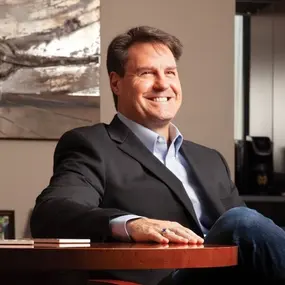
President & CEO
Gene Boes joined Northwest Center as CEO in 2017, after serving on the Northwest Center Board of Directors for three years. Previously, Boes was a management consultant serving as Principal for the Seattle office of the North Highland Company. In addition to his consulting duties, Gene also served as an Adjunct Professor at Seattle Pacific University and Seattle University, and is a Mentor for the Albers School of Business. Prior to joining North Highland, he was Managing Director at Loft9 Consulting, a Bellevue-based Management Consulting Firm. His career also includes nearly 14 years at Microsoft, two years with Deloitte Consulting, and nine years serving in the US Navy.