Understanding DEI Rollbacks and Unlawful Discrimination with Dr. ClauDean Kizart
As organizations respond to shifting federal guidance and growing scrutiny around DEI, many are scaling back their efforts due to uncertainty or fear. But what if the real risk isn’t doing too much, but not doing enough?
In this episode of Disability@Work, host Ashley Sims sits down with Dr. ClauDean Kizart—education leader, author of Beyond Implicit and Explicit Bias, and founder of Lightwork Equitable Solutions—to unpack what’s actually changing, what’s being misunderstood, and where employers may be getting it wrong.
Together, they explore why inclusion should never have been treated as a standalone program, how longstanding civil rights protections continue to shape workplace responsibilities, and what practical, compliant inclusion looks like today. Dr. Kizart also challenges leaders to rethink equity, prioritize lived experience in decision-making, and move beyond performative efforts toward real, sustainable change.
If your organization is navigating uncertainty around DEI, this conversation offers a grounded, actionable path forward— rooted in inclusion without exclusion.
In this episode, we cover:
- Why many organizations are pulling back on DEI—and what’s driving the confusion
- What federal guidance actually says (and doesn’t say) about discrimination and workplace practices
- The critical difference between equality and equity—and why it matters for business outcomes
- Why treating inclusion as a “program” sets organizations up to fail
- How the lack of diverse perspectives can create blind spots and business risk
Resources & Links:
- Email: dockizart@gmail.com
- Book: Beyond Implicit and Explicit Bias
- Lightwork Equitable Solutions LLC: https://lightworkeq.com/
- Dept of Justice - Office of the Attorney General (July 29, 2025): Memorandum for All Federal Agencies - Guidance for Recipients of Federal Funding Regarding Unlawful Discrimination
About the Guest:
Dr. ClauDean “Dr. K” Kizart is an author, educator, and founder of LightWork Equitable Solutions. She helps organizations uncover bias and build more equitable, inclusive outcomes.
About the Show:
Disability@Work is a Disability Solutions podcast. Hosted by Marketing & Communications Director, Ashley Sims, each episode offers practical insight for employers, HR and talent leaders, and advocates working to build more inclusive organizations. Learn more at DisabilityTalent.org.
Ashley Sims
Welcome back to Disability @ Work, the podcast where we explore what it really takes to build inclusive workplaces for people with disabilities. I'm your host, Ashley Sims. Over the last 18 months, we've seen a broad pullback in DEI efforts across organizations, driven in part by evolving federal guidance and how it's being interpreted. In many cases, employers are trying to make sense of what has actually changed versus what has simply been reframed, especially when it comes to discrimination and workplace practices. That gap in understanding has created hesitation and broader rollbacks from inclusion efforts altogether. So I'm so excited to be joined by Dr. ClauDean Kizart, an education leader, author and founder of Lightwork Equitable Solutions. She's the author of “Beyond Implicit and Explicit Bias,” where she challenges us to look deeper at how bias is built into systems. Today, we're going to explore how these ideas show up in the workplace, especially in this current moment. Dr. Kizart, welcome to the show. It's great to have you here.
ClauDean Kizart
Thank you for having me. I definitely appreciate the opportunity to be here.
Ashley Sims
Yes, I'm so excited. So now you and I had a really great preliminary conversation where you shared some I would call the mic drop insights and I can't wait to share with the audience. So let's get started. To start off, start us off, I'd love to get your perspective on what you're seeing right now. So there's been a lot of messaging and interpretation around DEI rollbacks, and we're hearing from employers who are unsure about where they can or should still be doing around DEI. So from your vantage point, what are you seeing when it comes to how organizations are responding to this moment?
ClauDean Kizart
I am seeing organizations and I start to say a lot, but I won't say that because something that I've been more consciously aware of is that you have media, but then you have people who are not in the media, right? And so in the media, it looks like there is companies that are rolling back their Diversity, Equity and Inclusion initiatives and focuses. And the reason that I use the language Diversity, Equity and Inclusion as opposed to DEI is because those are all very intentional efforts. It is an intentional effort to be, we are a diverse society. Right? Just like nature is very diverse, we are a very diverse society. And so the question when you are a diverse society, is how do we, the E is how do we ensure equity in the society? And people, some people, I was talking to somebody the other day. And their viewpoint on equity is, “Well, you're trying to say everybody should get the same thing.” No, not saying that. Not even saying that everybody should have the same opportunities. Why? Because as a diverse society, people need to have opportunities that support them, right? And so, say, for example, if you're talking about literacy. I used to be a literacy and equity trainer for the state of Missouri. If you go in the classroom and you say, well, everybody's gonna get the same instruction today, but you got some students who are reading on the third-grade level, a second-grade level, some on the seventh-grade level and some on a high school level. And you give the same exact instruction to everybody and that's all you do. You know that you're going to have some achievement gaps, right? Some people are going to get it. Some people are not. But if you are looking at it equitably, you'll do the whole group lesson and then you'll ensure that it's somewhere in your structure as an educator. And I used to do this in my classroom, so I know that it's possible. And I also train and support school districts in this space. So I know it's possible. Somewhere in your instruction, you ensure that you have materials that support those students who are reading at that third-grade level, and to support those students who are reading on grade level and above level, so that all your students are have the opportunity. You're providing the opportunity for them to grow and evolve from where they are, right? And then the E is through being equitable that we ensure inclusivity. So inclusion is what we really all want. We want it for ourselves. We want it for our family. We want it for our children. We want it for our neighbors. We want every, we want to be included. We want to belong, right? We want all of that. I think the politics happen when we sometimes forget that we're all in this world together and we literally all share the same air, right? And so we're greater together. And that's the absolute truth. And so what I'm seeing is some schools, some businesses, some agencies, agencies pulling back their work in honoring diversity, their work in being inclusive, their work in being equitable and providing equitable access, right? Even before being explicitly told to.
Ashley Sims
Yeah.
ClauDean Kizart
And I'm also seeing some schools and some agencies and some work and some corporations lean more in to how they honor diversity and lean into being more inclusive. Why? Because they understand that this is a diverse society and those businesses that are going to be around in the next 15, 20 years are going to be those businesses who have intentionally embedded practices in honoring the diversity of their of the people who work there, who intentionally cultivate inclusivity to ensure that their environment is productive and as positive as possible to boost morale. Who take temperature on their culture to ensure that the workers there and the administrators or the presidents and CEOs that they have a working environment that is successful for as many people as possible. Those are the businesses that will be around in the next 15-20 years. Those businesses that are rolling back. We don't care what your background, experience, color, race, gender is, everybody's being treated the same. They're not going to be around in the next 15, 20 years because Generation Alpha
[laughs]
and other generations after mine, they're not having this foolishness. They want to be seen. They want to be heard. They're going to be seen. They're going to be heard. And they have the advent of technology on their side. So that's what I'm seeing. And I'm seeing some people, some schools and agencies even pull back from things that are not necessary to pull back on. No one said it. For example, you and I talked in our conversation about a document from July 29th. And is it ok for me to talk about this here? Did you wanna?
Ashley Sims
Yeah, no. You can go ahead and jump in.
ClauDean Kizart
So on July 29th of last year, the Attorney General's office from the Department of Justice, they shared a letter. It's a memorandum for all federal agencies. So this is guidance for recipients of federal funding regarding unlawful discrimination. So this is the document that had people like, oh my God. Oh my goodness. We have to stop doing x, y and z. I told you I'm a literacy specialist, right? With a lifetime literacy certification. Gotta read deep. Not breadth. Read deep. On page 3 of that document it says Title VI. The Civil Rights Act of 1964 is still in place. Hasn’t gone anywhere. It's still in place. Title VII. The Civil Rights Act of 1964 is still in place. Title VI prohibited discrimination based on race, color, national origin. Title VII prohibits employment discrimination based on race, color, religion, etc. And then Title IX prohibits discrimination based on sex and education programs. Anybody receiving federal assistance. Those three laws are still intact. No one wrote an executive order to dismantle any of these laws.
Ashley Sims
Right.
ClauDean Kizart
They are still in place, right? And so, because they're still in place, the axe can swing both ways, right? So if you are a workplace, a workforce, a business, a school that has discriminatory practices, and if you look around and everybody in the room and your boardroom looks like you, thinks like you, that means you have discriminatory practices in place.
Ashley Sims
Absolutely.
ClauDean Kizart
Because how is that possible in such a diverse society?
Ashley Sims
Right.
ClauDean Kizart
Right. And it's going to be to your disadvantage, because that means that you don't have perspective from other walks of life, right? To ensure that your business is successful, to ensure that your students are successful, right? So that's one thing. In that same document, on page 8, it talks about examples and recommendations for best practices. The very first one is ensure inclusive access.
Ashley Sims
Yeah, this was one of the things that you pointed out when we talked.
ClauDean Kizart
Mmm-hmm. This is the DOJ's words, not Dr. K’s words.
Ashley Sims
Right.
[laughs]
ClauDean Kizart
And under the recommendation for ensuring best practices, ensuring inclusive access, it says all workplace programs, activities, resources should be open to all qualified individuals regardless of race, sex and protected characteristics. Avoid organizing groups or sessions that exclude participants based on protective traits. Some sex separation is necessary where biological differences implicate privacy, safety, or athletic opportunity, right? And then it goes on to provide recommendations. Some other recommendations was focused on skill instead of qualifications. No focus on skill and qualifications. So if you, again, if you look around and you're saying, wait a minute. Everybody in this organization, we all think alike. That means you're not focusing on skill and qualification, right? That means that anybody. If the DOJ came to poke around, they're going to find some discriminatory practices, right? They're going to find some practices that are rooted in biases. And if the law can swing both ways, there'll be even more lawsuits against people who aren't ensuring inclusive access and who aren't ensuring focus on skill and qualification.
Ashley Sims
Right.
ClauDean Kizart
Right. So in the same space of oh my goodness, we must get rid of these DEI. Then it should have never been a program in the first place. The work of diversity, equity and inclusion is not just a program.
Ashley Sims
Mmm-hmm.
ClauDean Kizart
It should not have. It should have never been a program, right? It is a strategy to ensure that schools are successful for all students, that businesses are economic moats. To be an economic moat, that means that you need to ensure that your business is strong enough to withstand outside obstacles and outside challenges. That means you need to be sure that your business is diverse, because you need to see things from different perspectives. And a good business person knows that they alone cannot see all perspectives.
Ashley Sims
Yes, I love that. Ok, so I think a lot of what's driving the pullbacks from DEI is fear. So if you make this practical for employers, what are a few things organizations can or should be doing right now to stay compliant while also still actively supporting disability inclusion? And what should they not be pulling back on specifically?
ClauDean Kizart
The next thing[a][b] is important is that we ask ourselves as businesses, how many voices from lived experience, different lived experiences are in the room? Julie and I were talking about anchoring bias this morning, and she asked me like, what are some of the strategies for navigating through and getting rid of anchoring bias? And I said, well, one of the strategies is ensuring that if we're talking about people with disabilities and you're making decisions about people with disabilities that you have someone with, you have multiple people who have disabilities as part of your decision-making in your group or in your subgroup, on your board, etc. Right?
Ashley Sims
- Absolutely.
ClauDean Kizart
Which means that you may need to step back and say, wait a minute, who's not at the table? Especially if your services serve a diverse population?
Ashley Sims
- Mmm-hmm, absolutely.
Ashley Sims
It's important to say who's not at the table that our business is catering to, or that our business is targeting to? And how do we get them at the table?
Ashley Sims
- Mmm-hmm. Absolutely.
ClauDean Kizart
And some people say, well, we couldn't find anybody of this ethnic group or this background. We couldn't find any qualified. Mmm-mmm. If you know how to go on Facebook, you can find a group for about anything. I love drinking out of these cute mugs. You can find a group of people who are talking about mugs that they love to drink out of, right? You can find a group talking about crocheting. You can find groups. And that's something that I do to support organizations too is search advocacy training. Because ensuring that you have a diverse pool of candidates, it is intentional. It's not enough just to post it on your website. There are people out there that don't even know your organization exist.
Ashley Sims
Right.
ClauDean Kizart
So how do you position your business, your company, your organization to get a diverse pool of qualified candidates? And that is a skill.
Ashley Sims
Absolutely. Well, before we wrap up, I'd love to leave listeners with one key takeaway from you. If there's one mindset shift you wish employers would make right now when it comes to DEI, what would that be?
ClauDean Kizart
The work, the real work. I'll start with one of my taglines. Inclusion is not exclusion, right?
Ashley Sims
I love that.
ClauDean Kizart
For me, for me at Lightwork Equitable Solutions, that's part of our core values is inclusion without exclusion, right? And the real work of diversity and the real work of inclusion, the real work of equity includes everyone. And everyone can be included. Everyone can be valued, can be seen, can be heard. Does that mean that everyone is the same? No. And it's ok. Does that mean that everybody's going to have the same thing? Everybody doesn't want the same thing.
Ashley Sims
Right.
ClauDean Kizart
Right. And so the work of, the true work of diversity, equity and inclusion is grounded in building morale. It's grounded in how do we ensure that we have an environment that is, that honors the diversity of the people who are here, right? And that can be as simple as how do we ensure, for example, one of the things that I used to do a lot for the college that I work with is a diversity calendar. And so every month we were clear about this month is Hispanic Awareness Month. This month is Native American month, this month is Women's History Month, right? And so making sure that we are, I mean, that's a bare minimum of intentionally honoring diversity. Like, do we communicate that we're honoring this month for whether it's women's history or Hispanic Awareness Month, Native American month, Black History Month? Do we ensure that we are honoring those months? And for the white men who feel like they're not included, you are included in that. You are.
Ashley Sims
Right.
ClauDean Kizart
Right. Because you have daughters who we celebrate during Women's History Month. You have wives, right? You're included in the Hispanic Heritage Month. You're included in the African American History Month. You're included, right? And part of why you're included also is if you look at the history books, you're deeply embedded in the history already, right? And so sharing the space is not taking away from you, right? And it's not taking away from anyone. And so how do we be inclusive without being exclusive? I want to be part of the work that helps to ensure and develop strategies, and cultivates a world where we live in, where we're all seen, valued and heard. And that doesn't mean that we all have to be just alike to do that.
Ashley Sims
Absolutely.
ClauDean Kizart
Inclusion without exclusion.
Ashley Sims
Yeah, I love that. Love it so much. Thank you so much for being with us today, Dr. Kizart. If this conversation resonated with you, please like, share with someone in your organization that can move inclusion forward. Until next time. Thank you.
ClauDean Kizart
Thank you so much, Ashley. Thank you.
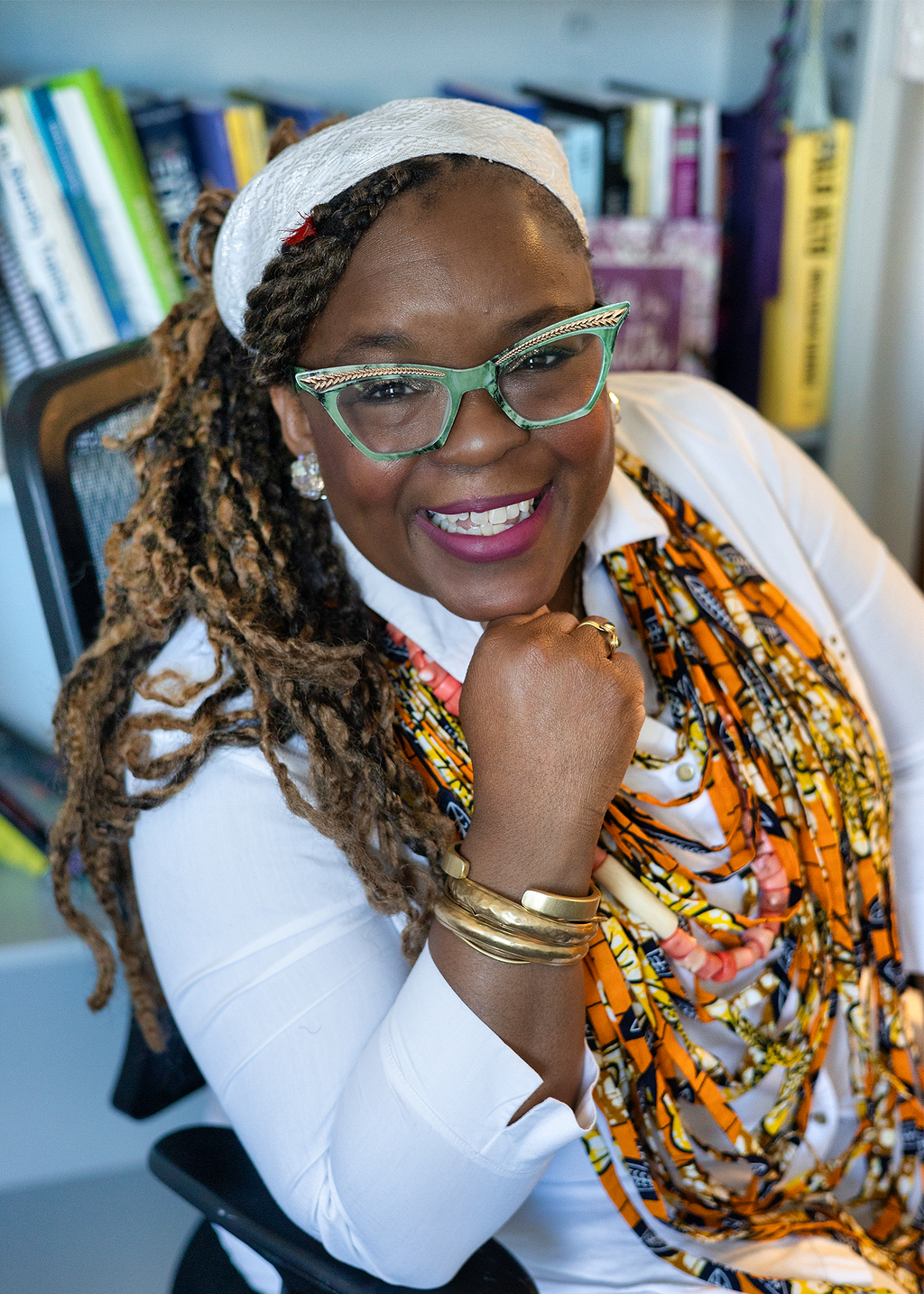
Author and Founder of Lightwork Equitable Solutions
Dr. ClauDean Kizart, is a nationally recognized leader and proprietor of Lightwork Equitable Solutions LLC, a consulting firm that supports schools, nonprofits, and businesses in
strengthening organizational climate, cultural responsiveness, and social impact. With over 25 years in education, Dr. K is also the author of Beyond Implicit and Explicit Bias: Strategies for Healing the Root Causes of Inequity
in Education, offers practical strategies for building awareness and promoting healing-centered approaches towards equitable solutions for ALL!