Physical Disability at Work with Jessica Cox and Pauline Victoria
What happens when talent is overlooked before it’s even seen?
In this episode of Disability@Work, host Ashley Sims explores one of the most damaging barriers disabled professionals face in the workplace: being underestimated. She’s joined by Jessica Cox, the world’s first licensed armless pilot, and Pauline Victoria, disability inclusion advocate and employment equity leader, to unpack how perceptions—not ability—often shape opportunity.
Together, they discuss what it’s really like to go into interviews and workplaces with visible physical disabilities, how assumptions impact hiring decisions, and why confidence and representation matter more than most employers realize. The conversation also reframes workplace accommodations—not as burdens, but as practical tools that enable people to do their jobs well.
Jessica and Pauline also introduce their new podcast, Living Unlimited, which centers on the lived experiences of limb differences and highlights resources, resilience, and community.
Key topics include:
- Being underestimated in professional settings
- Physical disability and first impressions
- Workplace accommodations and self-advocacy
- Confidence, representation, and disability inclusion
- Lived experience with limb differences
This episode is essential listening for employers and HR leaders working to build more inclusive workplaces, disabled professionals navigating interviews and workplace accommodations, and anyone seeking a deeper understanding of physical disability in the workplace.
Disability@Work is produced by Disability Solutions, a nonprofit job board and consulting firm dedicated to advancing career success for people with disabilities. We partner with employers to demonstrate the real business value of hiring and retaining talent from the disability community. Join us for honest conversations and bold perspectives on what true disability inclusion looks like in today’s workplace.
Notes:
Guests:
Jessica Cox
Pauline Victoria (Sand) Aughe
Host:
Ashley Sims
Ashley Sims
Welcome back to Disability@Work, the podcast where we explore what real inclusion looks like in the workplace. I'm your host, Ashley Sims, and today we're talking about physical disability in the workplace and one of the most persistent and damaging barriers disabled professionals face: being underestimated. I'm honored to be joined by two leaders, advocates, and professionals who bring powerful, lived experience to this conversation. Jessica Cox, internationally recognized speaker advocates and the world's first licensed armless pilot, and Pauline Victoria, disability inclusion advocate, speaker, podcast host, and professional focusing on equity, access and employment. Jessica and Pauline are also the co-hosts of the new podcast “Living Unlimited,” where they explore the lived experience of limb differences. Together, they challenge the assumptions and share what it is really like living with limb differences. Jessica and Pauline, thank you both so much for being here today.
Jessica Cox
Thank you.
Pauline Victoria
Thanks for having us.
Ashley Sims
Yeah. When people talk about physical disability at work, they often jump straight to logistics, accommodations, equipment, accessibility. But before any of that, there's perception. As two professionals living with limb differences, you both navigate those perceptions constantly, whether in the workplace or beyond. When we walk into a professional environment, what assumptions do people make about you right away?
Jessica Cox
Pauline, I'll let you go head start on that one.
Pauline Victoria
Ok, ok. So, I think when you walk into, say, an interview, right? That's usually the first engagement you have with the company. Excuse me. And I, there's very little time to make a good first impression. And of course, the first impression for people, many people, when they see me, someone without limbs, is, they wonder, like, how? How can she? How, how, how, how, how? How will she write? How will she take notes? How will she file? How will she type? You know, all the things. How will she get to work? And so, it's really hard, I think, in our environment right now because people are afraid to ask those things. About, like, how will you do this? Can you explain? Because maybe they're afraid of getting in trouble for asking questions about my abilities. But in my experience, having meeting people for the first time, I don't get to, I guess, show off my skills in a very short amount of time. And so, because I know that they can't ask me those questions, I will often volunteer that information, and try to get them to understand as much as possible what it is I can do and what I can bring to the table. But it really is an uphill battle going into an in-person interview. Having to, you know, fight all of those misconceptions and first impressions that they're having and running in their mind. And I can almost hear what they're thinking by looking at them. And so, in professional settings, you know, and I'm talking about this in the context of an interview. I'm often having to assert my abilities and explain things even if they don't ask.
Jessica Cox
And yes, just like that, what Pauline’s saying is it's almost like we have to kind of come forward and be a little bit more assertive and overcompensate for that misconception. Unfortunately, the reality is, you know, that people can only see life through the lens of someone with arms and hands and, or legs and feet. But in Pauline's case, and Pauline doesn't have arms or legs, and I don't have arms or hands. And it's basically a really difficult thing for them. So initially, they probably come with a little bit of shock. I remember my first job experience. I was, you know, just in high school still, just trying to get a high school job. And like anyone, you know, I wanted that independence and that freedom and that sense of self of knowing that I could provide for myself and that pride that comes with it, the dignity of having a job. And so I went to this interview not knowing if it was gonna happen or not. And it was weird because the other questions about, you know, unrelated to the way I do things, just didn't even, like, the questions of the interview didn't bother me more so than are they gonna be able to see past this and give me a chance? See past the fact that I don't have arms? And maybe I just do things in a different way. And I go into this interview, and I remember seeing off to my right at a desk was an employee with a disability. But he basically had a cane with him and he was fully blind and was navigating this workspace as an employee. And I was like, wow, here's someone who's paved the way of impressions when it comes to disability. And that gave me almost, like, a boost of confidence, knowing that here's someone who is blind and is working just fine. And so they're gonna be able to give me a chance. And that was so encouraging just to know that going in. But initially, before I knew any of that, I was a little hesitant about the situation.
Ashley Sims
Absolutely, yeah. It's so powerful to call out representation, I think. It's so important to be able to see yourself, even in, like, glimmers. Because it wasn't the exact same type of disability that you have, but just seeing someone else who was navigating that workplace with a disability so important. Yeah. And that's something that we talk to employers about a lot. I would like to pivot a little bit and talk to you guys about accommodations. So too often, accommodations are framed as like, special treatment or a burden to the employer. How would you reframe that conversation from your perspective?
Pauline Victoria
Hmmm. I need to think about that a little bit. I'm not sure if it's a reframe, but it's, I've never had an issue for asking for accommodations. If they hired me for a position, and the accommodation allows me to do my work better or allow me to fulfill the position that they hired me for, then why not give it to give it to us? I remember working for the city of Sunnyvale and one of the accommodations I needed as I, I’d started out not really needing too many accommodations. Desks are usually the right height for me. But it was, it required a lot more typing than I knew. And I was starting to get pain in my neck because I, the way I would type. And so I asked for Dragon NaturallySpeaking, which is a talk to text type of software program that they can put on a computer. And they had no problem doing that. But at this point, they already knew the work that I was able to contribute. They knew what I was able to do. And so they had no problem in going, yes, of course, if this is gonna help you do your job without pain, then we will do that. And there is some cost involved, but the cost it would take to hire somebody new or an unknown would be probably more. Because they knew I was good at my job. They hired me for that job. And I just needed a little bit of help.
Jessica Cox
I remember going into this workspace when I was hired to essentially, just in my own way, make it comfortable for me. It was for me, it meant putting the keyboard on the floor so I could type with my toes and putting on my headset and adjusting the desk chair so it was at a good height for me. They soon learned that I could accommodate myself because who knows your needs better than yourself? Just having the confidence to be able to do that. And yes, it looks different. And yes, it might draw some attention from around you, but you are kind of in the zone if you have the confidence to do it, what you need to do, I think that they will respect that. And that's kind of the feeling I got for my workspace, is I just made these few accommodations. And eventually I was just one of the other employees and it wasn't like I was any different.
And it became successful for me because I remember that first day working on the job, being the only one who got the bonus for the first day because I hit the the goal of the day. Anyway, it was a great experience, but there were still some hesitations. And sometimes I feel like you have to overcome your own self in a way, because you are your own worst critic at times. And, we can really blow things out of proportion in our own heads. So what you can kind of get through that. It's helpful to just say, you know, I'm gonna just take this one step at a time. And I'm gonna do the best I can. And whatever gets thrown at me, I'm gonna tackle this one challenge at a time. And do what I have to do to speak up for myself if I have to, accommodate the environment, the desk or the workspace to my needs and not be afraid to be different. Those are kind of some of the emotional things that were even greater barriers. Because if we learn to be confident and we move through our routine in a, assured way, I think that that shows people that they, you know, you've got this and give them the space and the respect to do what they need to do.
Pauline Victoria
I want to highlight what she said. I think one is that we need to when you go into a job or a professional setting, have confidence in your capabilities, because that will speak louder than any words that you could say. Any demonstration that you do is the energy that you bring. And not to take things so personally, right? You might not get hired for every job. It might take a little while longer. But just stay in that confidence of what you are capable of. And then a note to employers. People with disabilities have had to work ten times harder, usually to get the same result as somebody without a disability. So it's not surprising that you were the only one that got the bonus that day. [laughs] Jessica, because it doesn't surprise me. I think what employers will find is that people with disabilities will be their best workers. And the best ralliers for any team setting.
Ashley Sims
I love that. You gave me chills saying that, because it's so true. It really is. Ok, so let's pivot a little bit. You guys just launched the new podcast, Living Unlimited. Tell us a little bit about the podcast and your goal.
Pauline Victoria
Do you want to go, Jess?
Jessica Cox
You go ahead, Pauline. This all started with you, so. [laughs]
Pauline Victoria
Ok. [laughs] Well, the Living Unlimited podcast was born of my desire to increase awareness of resources that are available for people with limb differences. It started with me being notified about an organization that was several years old. I knew people on the board, on the, you know, that were attending these conferences every three years. It's called Enhancing Skills for Life. And this past year was the first time I heard of it. And so I'm a problem solver. I like solutions. So it started out with this problem. Like, how am I surrounded by people who knew about this? But no one told me. I'm like, I have a limb difference. Isn’t it obvious? But and they didn't. And so my heart was to increase the awareness of how we live with that, with limb differences and the resources that are available to support us.
Jessica Cox
And I loved the fact that Pauline was excited about this for the same reasons that she's talking about, but also because her and I have this, a lot in common. And I'm not talking about the not having arms, but I'm just saying other for other reasons. We have commonalities. And I thought, we have this great energy between the two of us and such an optimistic outlook on life that could really bring light to anyone who is overcoming the initial emotional challenges of living life with limb differences, whether it's because they lost a limb or whether they're coming into their own and they need to find that confidence. And because her and I both are in this space of helping others, why not help a community that this resonates so closely, so intimately with. And it's just so beautiful what we've been able to do. And, just, I mean, we just launched it, but this is going to be an amazing resource for people and I hope that everyone can listen in on this podcast to connect in some way, in some fashion.
Ashley Sims
Love it. Jessica, Pauline, thank you so much for joining me today and for sharing your experiences. Don't forget to tune in to Living Unlimited. When's your next episode coming out?
Pauline Victoria
They will come out biweekly, so every other week. So our first episode came out yesterday, February 16th. So March 2nd will be the next one. And if you love the first episode, it only gets better. So please subscribe share, join our community.
Ashley Sims
Absolutely. Thank you so much to our listeners. Thanks for joining us on Disability@Work. Like subscribe, share ours as well. We'll see you next time.
Thought Leader
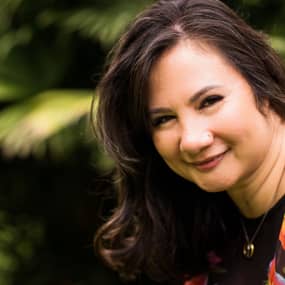
Pauline Victoria is an Inspirational Thought Leader and founder of One Leg Up Productions. Born without arms and legs, Pauline uses her extraordinary life experiences to offer transformational perspectives that inspire others to rise above limitations and embrace their greatness.
Rooted in her signature “powered by possibility” approach, Pauline teaches that true visibility doesn’t come from performance or perfection—it comes from courage, authenticity, and alignment. Through coaching, masterminds, and retreats, she equips thought leaders, messengers, and impact-driven entrepreneurs to step into their full potential and amplify their visibility with confidence and purpose.
She hosts The Small Victories Podcast and is co-host of the Living Unlimbited Podcast alongside Jessica Cox, a show created for people with limb differences and anyone who has ever felt different or unseen. They also lead the Living Unlimbited Skool Community, a space for connection, courage, and fully living. Pauline also leads the Made for More community, sharing mindset and business strategies that empower others to build successful, fulfilling lives with a “no excuses” approach—proving that when you create from possibility, anything is achievable.
Motivational Speaker
info@fearlessjessica.com
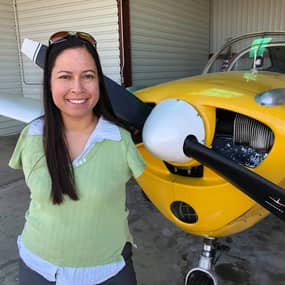
Jessica Cox is a motivational speaker featured on TV shows like Ellen, CNN, National Geographic, Fox and Friends, and BBC News. Her speaking career spans 18 years, 28 countries, and audiences up to 40,000 people. Companies like AT&T, NASA, the Smithsonian, State Farm, and Cisco have asked her for inspirational workshops, keynotes, and more.
Jessica was born without arms and uses her feet the way most people use their hands. Jessica grew up asking with frustration and anger, “Why me? Why do I have to be different?” She learned to see the blessings in her life and accept herself as a whole person. Now, Jessica flies airplanes, drives cars, is married, and otherwise lives a normal life.
Jessica is the author of Disarm Your Limits, an autobiographical self-help book that has sold more than 10,000 copies. She has also been a regular contributor to Flying Magazine. In 2020, Jessica announced plans to build The Impossible Airplane, a custom 200 mph, 4 seat airplane she will use to circumnavigate the world. When she’s not flying off into the sunset, Jessica continues to train in Taekwondo, where she’s a Fourth Degree Black Belt.